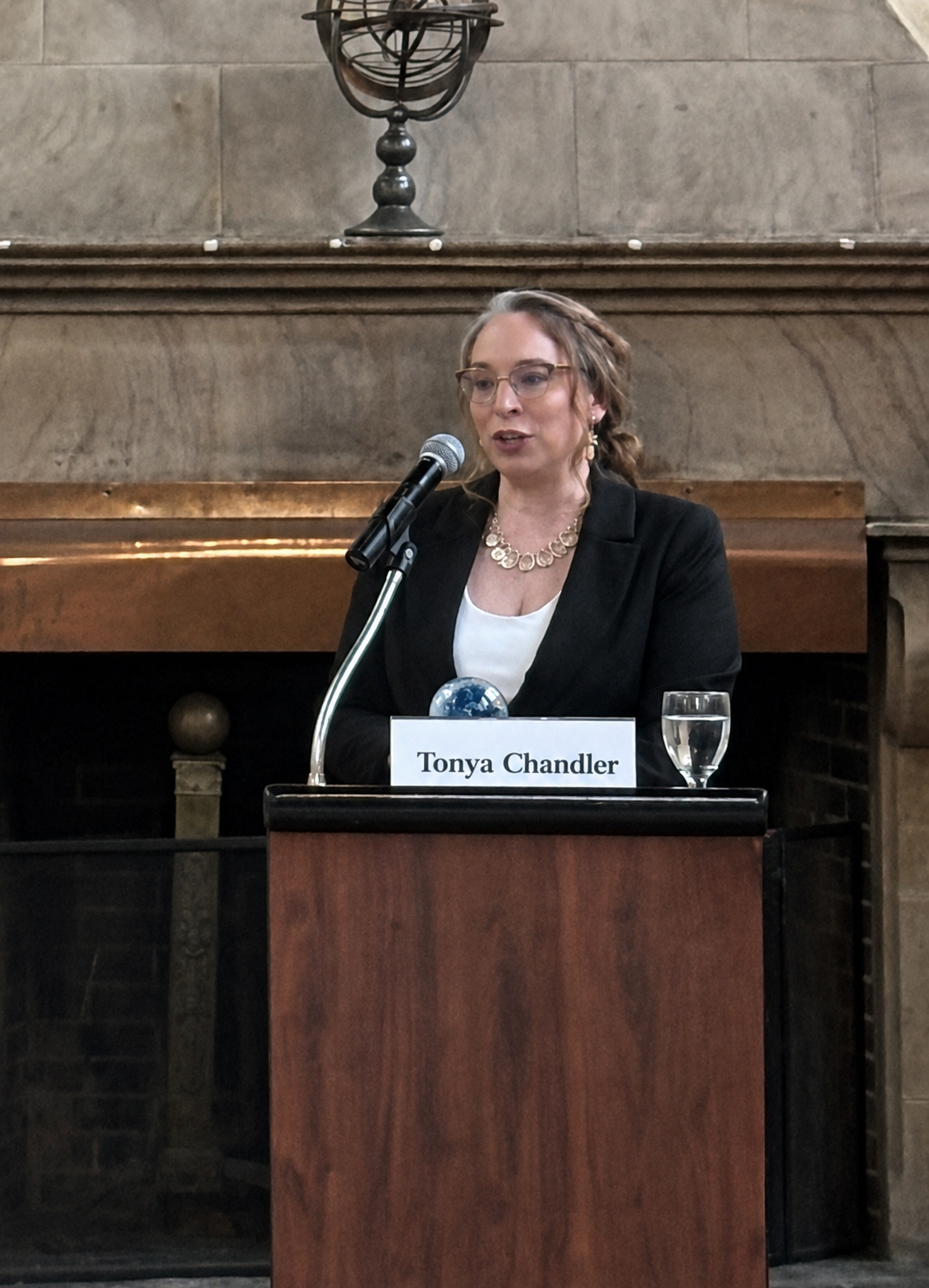
Tonya Chandler
PFAS Readiness and the Opportunity for American Manufacturing Leadership
Tonya Chandler
PFAS Readiness and the Opportunity for American Manufacturing Leadership
America deserves a strong manufacturing base and a healthy environment.
For too long, the public conversation has treated environmental stewardship and American manufacturing as if they sit on opposite sides of a scale where one must go down for the other to rise. That oversimplified framing is outdated, and it has kept us stuck in arguments that slow real progress.
Let’s start with some good news.
There is a real sense of momentum in American manufacturing today, and it’s hard not to feel encouraged by it. Communities that spent years watching factories close are now seeing new facilities break ground. Supply chains that proved fragile during the pandemic are now being rebuilt with intention. Critical materials are being produced closer to home again.
Alongside all of that, we’re seeing a surge of real innovation with the development of new processes, new technologies, and new ways of thinking about what responsible industry can look like in the United States.
For anyone who cares about resilient local economies, this is good news. And for those who care about environmental protection, it should be as well.
Time To Reframe the Debate: Manufacturing and Environmental Protection as Shared Goals
Some say we must decide between a strong economy or a healthy environment. That is a common misperception. A progress or ecology debate is outmoded thinking. Here’s why.
A strong manufacturing base and a healthy environment don’t have to be competing priorities. What was once treated as a tradeoff is now a shared goal: building manufacturing while improving environmental outcomes.
The question isn’t whether we are going to build more data centers, expand chip manufacturing, or strengthen our energy infrastructure. We already are, and these sectors are accelerating globally. They provide the backbone of modern life, showing up in everything from the appliances running in our homes to the systems that protect national security. They drive medical innovation and power the digital tools Americans rely on every day.
The real question is how we do it.
Embedding environmental stewardship should be a core strategy, not an afterthought. Even as regulation works to catch up, innovation, smarter design, and better technology are making it possible to grow these industries while improving environmental outcomes.
Overcoming the peril of PFAS is central to that challenge. If we are serious about responsible, forward‑looking growth, we have to address one of the most immediate and consequential issues: a class of invisible chemicals most Americans have only recently become aware of, per‑ and polyfluoroalkyl substances, more commonly known as PFAS.
The PFAS Reality Check
Dubbed by the media as “forever chemicals,” PFAS are everywhere. They are found in firefighting foams, personal products, nonstick coatings, industrial finishes, and countless specialty applications tied to manufacturing. They are also extraordinarily persistent. They do not break down, they accumulate in water and soil, and they remain in the human body. The science is still evolving, but what we know today is enough to justify the regulatory response now underway across the country.
As manufacturing scales back up, PFAS is not a side issue. It is a central operational and financial risk. Facilities that use, produce, or discharge PFAS-containing wastewater now face a tightening regulatory landscape: CERCLA designations that trigger long‑term cleanup liability, RCRA rules governing PFAS‑laden waste, and new EPA drinking water standards that force utilities (and the industries that discharge into them) to pay close attention to what’s actually in their water.
This reflects a long‑overdue correction. For decades, industry benefited from PFAS while the public absorbed the environmental cost. Today’s regulatory shift is about rebalancing that equation and if done well, it creates a more predictable, stable operating environment for manufacturers rather than exposing them to the slow‑moving catastrophe of contamination liability.
NPDES Permitting: A New Era of Accountability
For manufacturers that discharge wastewater, the NPDES permit is no longer a routine compliance checkbox. Regulators are increasingly incorporating PFAS monitoring and effluent limits into permits, and companies that wait will find themselves retrofitting systems under pressure. That tends to be expensive, disruptive, and visible.
Companies that engage early, come prepared with data, and demonstrate credible source control generally secure more workable permit conditions and build stronger relationships with regulators.
There’s also the downstream reality: municipal wastewater plants were never designed to remove PFAS. When industry sends PFAS to a municipality, it doesn’t disappear. It moves into effluent, biosolids, and ultimately into downstream discharge, where it can make its way into drinking water. Municipalities are increasingly unwilling to absorb that burden, and many are already imposing surcharges, flow restrictions, or outright refusals to accept high‑PFAS laden wastewater. Source control and pretreatment aren’t just environmentally responsible, they’re economically rational.
Solid Waste and Landfills: The Hidden PFAS Liability
Solid waste is no different. Are we just kicking the problem down the road? Waste that ends up in a landfill is not a final destination. It is a transfer of responsibility. As PFAS scrutiny intensifies, landfills are facing their own regulatory reckoning, with leachate monitoring, pretreatment mandates, and disposal restrictions tightening nationwide. Manufacturers that rely on landfilling PFAS‑bearing solids, spent media, sludges, filters, wipes, residuals from cleanup, etc. are discovering that what once felt like a low‑visibility option now carries real financial and legal exposure. Landfills are increasingly unwilling to accept high‑PFAS waste without surcharges, special handling fees, or outright rejection, and many are pushing those costs back upstream to the generators. For manufacturers, the smartest path forward mirrors the NPDES landscape: reduce PFAS at the source, minimize the creation of PFAS‑laden solids, and avoid triggering RCRA or CERCLA designations that can follow a company for decades. When facilities invest in treatment approaches that concentrate less waste, generate non‑hazardous solids, or eliminate PFAS altogether, they not only protect the environment, they protect their balance sheets and their community relationships.
What Actually Works: A Toolkit Built on Expertise, Not Silver Bullets
The encouraging news is that we are no longer operating in a technological vacuum. Effective PFAS treatment approaches exist, and the field is advancing quickly. But one of the clearest lessons from real‑world industrial applications is that no single technology solves the PFAS problem on its own. The real differentiator is the expertise required to design a system that fits the chemistry, the flow, the operational realities, and the long‑term liability profile of a specific facility.
A modern PFAS strategy starts with understanding the facility’s own processes; where PFAS originates, how it concentrates, and how it moves through the plant all play a role in creating effective mitigation and treatment. That level of characterization is what allows engineers to design treatment architectures that combine separation, concentration, polishing, and, increasingly, destruction in ways that actually work. The goal is not to pick a technology off the shelf. It is to build a system that fits the facility.
This systems-level approach also creates a pathway to the future. Destruction technologies are maturing quickly, and facilities that design flexible treatment trains today will be able to incorporate those methods as they become commercially viable. In other words, the smartest PFAS strategies are not built around a single piece of equipment, they are built around adaptability, operational simplicity, and a clear understanding of how to keep both environmental and financial risk low over the long term.
The Real Cost Question: Who Pays If Industry Doesn’t?
Opponents of PFAS regulation often frame the issue as a choice between environmental protection and affordable manufacturing. But the costs don’t disappear when industry avoids treatment, they shift to municipalities, to ratepayers, to taxpayers, and to communities.
A manufacturer that invests in pretreatment isn’t just doing the right thing. They’re choosing not to externalize their costs onto the public. And the math is clear: CERCLA cleanups routinely reach tens of millions of dollars, while municipal upgrades triggered by industrial PFAS loading become long‑term financial burdens that are nearly impossible to unwind.
A Manufacturing Renaissance Worth Celebrating
America needs manufacturing for jobs, resilience, and national security. We can achieve that without repeating the environmental mistakes of the last industrial cycle.
That requires treating PFAS stewardship as a design parameter, not a burden. Facilities that take this approach will see more predictable permit outcomes, lower long-term liability, and more stable operations.
The companies best positioned to succeed will not be the ones resisting environmental responsibility. They will be the ones that recognize a clean operating environment as a competitive advantage. Communities want industry they can trust, municipalities want partners who don’t create unmanageable problems, and regulators work more constructively with facilities that demonstrate genuine commitment.
Rebuilding American manufacturing is worth doing. The question is whether we do it well.

Tonya Chandler
Tonya Chandler is President of BioLargo Equipment Solutions and Technologies and a leading voice in PFAS management and industrial water strategy. She works closely with both manufacturers and municipalities to navigate the complex regulatory and operational challenges of PFAS, advancing practical solutions centered on source control, pretreatment, and system design to reduce long-term liability and environmental impact.
Often referred to as “the PFAS lady,” she is also an active advocate for PFAS education, helping industry leaders, regulators, and communities better understand risks, regulations, and the path forward.
Biolargo PFAS Solutions website can be found here…
Summary of Comments: PFAS Forum Long Island
Moderator: John L. Parker, Esq.