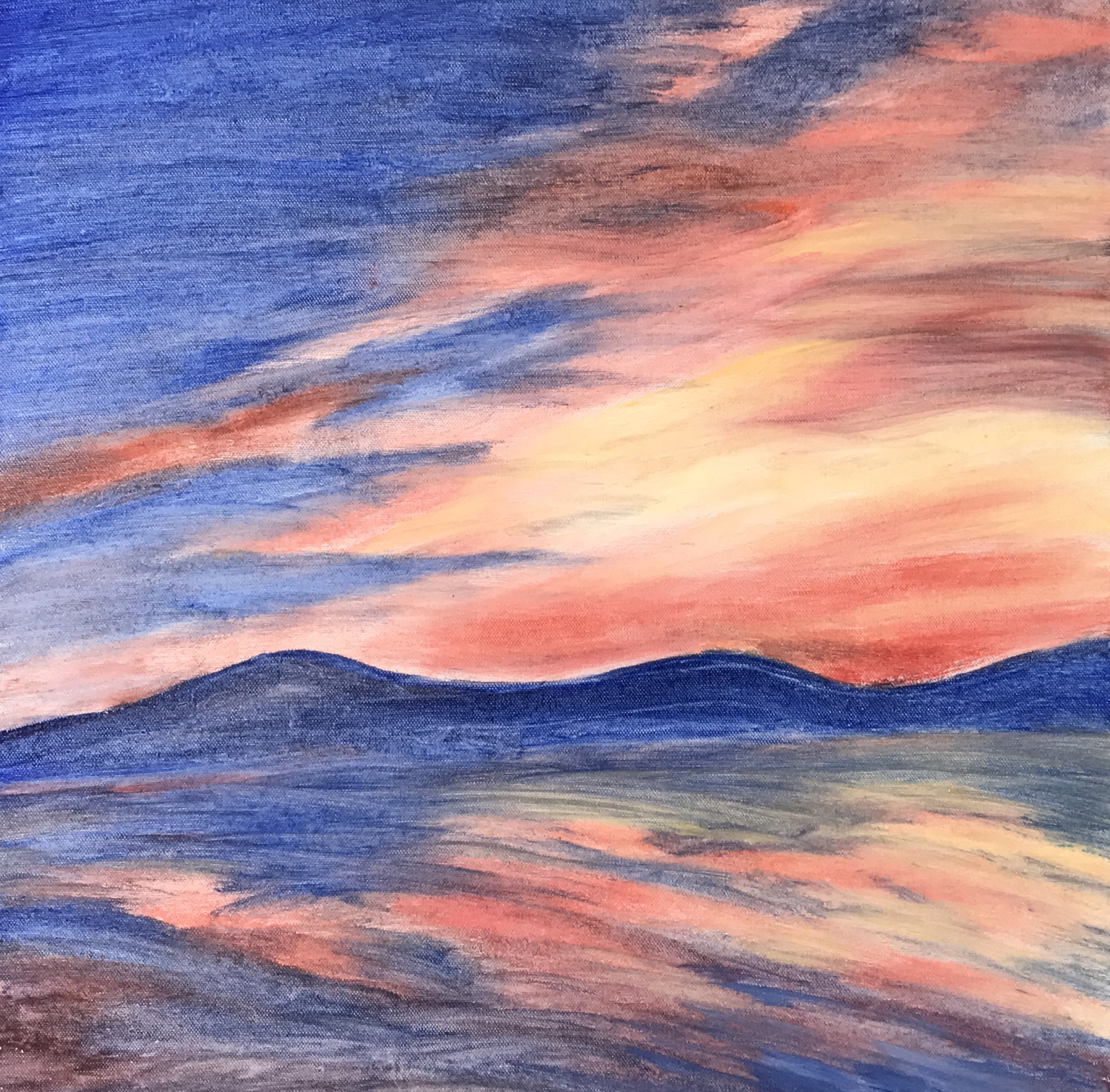
Susan Hillary Shapiro, Esq. & S.D. Smith, Esq.
The Environmental Story of Mahicanituck
Susan Hillary Shapiro, Esq. & S.D. Smith, esq.
The Environmental Story of Mahicanituck
“Mahicanituck”, is the “River-That-Flows-Both-Ways.” It is the Hudson River – a mythical river in American history, and one that has been at the forefront of many time important periods and the environmental movement.
“Mahicanituk” is the original Munsee word for the Hudson River. The Munsee are one of the original peoples living in the Hudson River Valley including Manhattan (“Land of Many Hills”). The “Mahican” and “Mohegan” communities lived on both banks of the Mahicanituk. The Ramapough Munsee Lenape Nation is descended from the original Munsee people, and they still remain in the Hudson Valley,
The Hudson River is a tidal river from stretches from the ocean to Albany, and then to its headwaters at Lake Tear of the Clouds. It has different flow rates areas around the mid-Hudson Valley that shifts the “salt-front” from freshwater to saltwater northward and southward as the river flows. With towering cliffs at the Hudson Highlands to the wide expanses of the Tappan Zee, the Hudson has much in common with the plentiful fjords of Scandinavia crafted during the last Ice Age. It is the nursery for the endangered Atlantic Sturgeon (Kapaaxeew in Munsee) and Bald Eagles (Waapalaneew) which were killed to the point of near extinction, and are now returning, as human beings begin to have healthier relationship with the River. Seven communities rely on the Hudson for drinking water.
The 315-mile Hudson River is steeped in American history. It is where explorer Henry Hudson searched for a northwest passage. During the Industrial Revolution it served as a major transportation route for commerce. Industry provided jobs, created communities, and brought economic growth, which left its mark on the River with industrial pollution. Two hundred miles of the Hudson River is contaminated, resulting in its classification as an Environmental Protection Agency Superfund site – one of the largest in the country.
The Hudson River Valley has been instrumental in the history of environmental protections in the United States. In 1965, the Storm King Decision established the legitimacy of environmental issues and protected the River as an irreplaceable natural resource. It became integral to the creation of the Environmental Protection Agency, the Clean Water Act, and the 1970 National Environmental Policy Act (NEPA) spearheaded by Scenic Hudson. After Storm King federal agencies are required to assess the environmental effects of proposed major federal actions before making decision
Recreational and commercial fisheries have been closed down because of high levels of PCBs (polychlorinated biphenyls) which are considered probable human carcinogens. PCBs bioaccumulate – increasing concentrations in each species that consumes it, as it moves up the food chain, eventually to human fish consumption. Health advisories about eating Hudson River caught fish are posted along the river. During a 30-year period ending in 1977, General Electric (GE) discharged 1.3 million lbs. of PCBs into the Hudson. After years of litigation, the environmental groups led by Hudson River Sloop Clearwater prevailed, and GE was ordered to dredge large swathes of the River to remove the significant contamination in the river sediments. The initial phase of the clean-up cost $1.7 billion.
In 1970, the nuclear reactor site at Indian Point opened in Buchanan, New York. In 2001 Assemblymember Richard Brodsky and myself, along with John Parker, prevailed in state court litigation to enforce the Clean Water Act and stop Indian Point from thermally polluting the Hudson River, entrapping billions of fish every day, and leaking unmonitored radioactive effluent into the River. Riverkeeper prevailed in federal court and precedent was established that while costs may be considered, the “best technology available” is needed for compliance with the Clean Water Act. To prevent the large amounts of thermal pollution closed-cycled cooling was the only technology available to stop the reactors from sucking in billions of gallons of cool River water a day, and spewing it back into the River superheated. In 2016-2017 hundreds of bolts in the reactor core were found to be degraded or missing after years of bombardment by hot, corrosive radionuclides. Instead of making the necessary repairs and retrofits to meet compliance the reactors were shut down in 2021, leaving a toxic legacy of over 1,400 metric tons of high level nuclear waste on the banks of the Hudson.
The ownership of the site was transferred to a new company Holtec. When Holtec announced it planned to release 1.3 million gallons of radioactive waste water into the Hudson River, over 450,000 people signed a petition opposing the dumping. In 2023, the “Save the Hudson Bill” (S.6893/A.7208) became state law banning discharge of radioactive wastewater into the River to protect the economic vitality and revival of the Hudson Valley. Recently a federal court ruled that federal law preempts this state law, this decision is currently being appealed.
In 2023, the Ramapough Munsee Lenape Nation passed a Rights of Nature resolution recognizing the rights of the Mahicanituk, the Hudson River, as a being an entity with rights. After all, if corporations are considered “persons”, then why not Rivers that supports many forms of life, including human life?
Already many communities worldwide are recognizing the Rights of Nature. The Maori (Aotearoa/New Zealand) recognize the rights of the Whanganui River. The Sauk-Suiattle recognize the rights of Salmon (Tsuladxʷ), and Ojibwe have recognized the rights of Wild Rice (Manoomin). The emerging Rights of Nature movement is a path to re-establishing a healthy relationship with the natural world, preventing further destruction and extinction of living beings, including possibly the human species. Good governance recognizes the right of human beings to good water, on a deeper level this recognizes that we are composed mostly of water.
This is a long overdue recognition of our connection to the natural world and reflects growing environmental awareness. Human beings are not apart, from the natural world. Rather, human beings, like other beings, are a part of the environment and natural world. The Hudson River itself has rights, not just as an irreplaceable resource, but as a living entity.
Susan Hillary Shapiro, Esq.
Author
Susan is a New York State environmental law attorney and water protector. She brought groundbreaking litigation which helped close the Indian Point nuclear reactors; participated in President Obama’s Blue Ribbon Commission on Nuclear Waste; was a fellow at Environmental Protection Agency; and extensively researched and lectured on climate change impacts of nuclear energy. She has been involved in high-profile Hudson Valley environmental cases, including protecting major interstate Sole Source Aquifer system, eminent domain, overdevelopment, and annexation disputes.
As an award winning filmmaker and painter her work has been shown at the Whitney Museum of Art and Brooklyn Museum of Art, and the Sundance, Tribeca, and Cannes film festivals. Since 2010 she has run permaculture farm in the Hudson Valley. She is of ecosystem thinker who moves between courtrooms, fields, and creative spaces with the same purpose: protection, stewardship, and expression.
She received her BA in creative writing from University of Pennsylvania, BFA from NYU Tisch School of the Arts and Juris Doctor from Cardoza School of Law. She is a New York State Bar member and currently operates Rockland Environmental Group.
S.D. Smith, Esq.
Author
SD Smith, Esq. received his Bachelor of Arts in political science from the University of California at Santa Cruz and his Doctor of Jurisprudence from the University of California at Berkeley. Mr. Smith studied Mexican culture and history as a Pacific Rim scholar of the University of California.
Mr. Smith has taught and lectured on a wide variety of subjects including business law, science, technology and law at Virginia Tech and the University of Richmond School of Law. He has also lectured on telecommunications policy, trade policy, environmental law, and the human rights of indigenous people. Mr. Smith has assisted Navajo, Tohono O’odham, and Guyanese villagers with major environmental issues in national courts, before Congress and the United Nations. Mr. Smith was attorney-general for the Ramapough and is currently an advisor. Steven is a member of the California bar and Virginia bar.
The Unique Water Story of Rockland County
Susan Hillary Shapiro, Esq.
The Environmental Story of Mahicanituck
Susan Hillary Shapiro, Esq., SD Smith, ESQ.
Water for Everyone, But is Everyone for Water
Shavonne F. Smith