Amanda Cronin
The Wisdom of Rocks
Amanda Cronin
The Wisdom of Rocks: The Rematriation of Ancient Effigies to Water
“To laugh like a brook/When it trips and falls/Over stones in its way.” – Rogers and Hammerstein, “The Sound of Music.”
I did not have a white noise machine in my bedroom as a child. I didn’t need one. I was lulled to sleep by the chorus of one thousand spring peeper frogs just yards away from my open window. My frog neighbors resided in the swamp that crept up to our lawn and dipped down into the ditch that spanned the length of our driveway.
The swamp occupied a fantastical place in my imagination. It was a mystery world full of curiosities, like the prehistoric-scale skunk cabbage blooms that waved at me from the depths. Every day, I passed the swamp on my walk to catch the bus to Roaring Brook Elementary School. What I did not realize in my youth was that the water from my home swamp followed me underground the whole way to school, over hill and dale, and drained straight into the roaring brook of my school’s namesake. That same brook was the subject of a recent legal battle that compelled neighbors to reckon with the past, present, and future of our town’s hydrology.
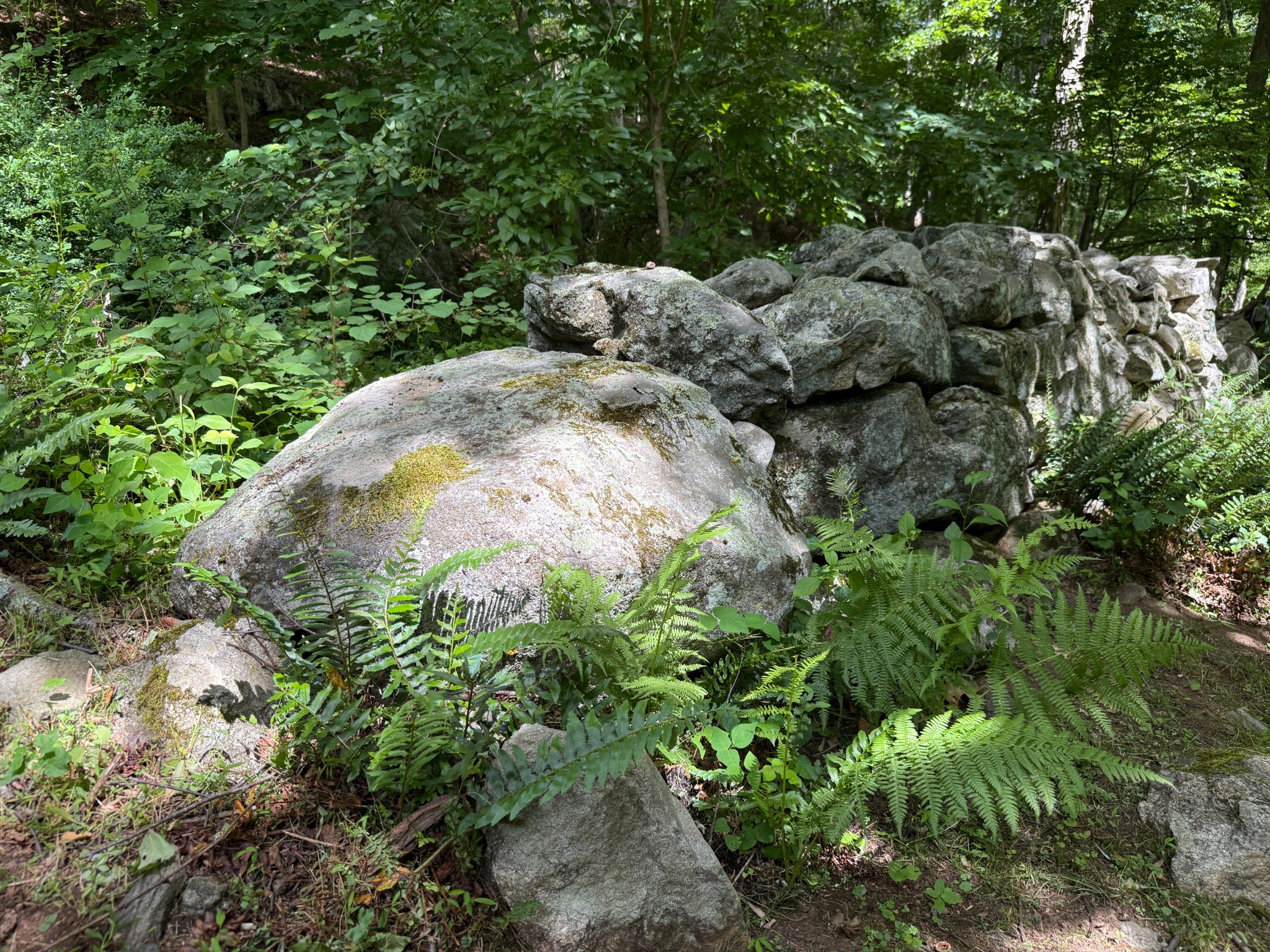
I grew up in the village of Chappaqua, New York. The name “Chappaqua” is an anglicization of the native Algonquin word “Shappekwa,” which translates to ‘shapi’ = rattle, jingle, babble, and “pekw” = pooling or deep water. It was in these pools that beavers made their lodge homes. Native Americans revered the beavers for their engineering skill, calling them “The Old Wise Ones.” Perhaps inspired by the beavers, indigenous people innovated their own water tracking methods. Before the invention of geo-spatial imaging technology and piezometers, Native Americans connected the dots using stones. This lithic system marked the route of the groundwater, which served both a pragmatic and a ceremonial purpose. In Chappaqua, these stones may have marked the location of aquifers, which still flow into the modern-day Croton watershed and feed New York City’s water supply.
When Dutch and English colonizers came across these thriving beaver populations and the other plentiful natural resources of the Hudson Valley, they saw dollar signs. When the beaver trade became lucrative, settlers forced native nations from their land through fraudulent property transfer deals and violence.
The descendants of those tribes now may finally have the chance to retake a small piece of their home land. Tribal members of Brothertown Indian Nation, which was forcibly re-located to modern-day Wisconsin, recently visited a forested part of their ancestral land in Chappaqua, New York, prompted by an invitation from a local community group. The forest, called “Buttonhook” (after the shape of its adjacent road), borders the property of several neighbors whom re-discovered sacred stone formations just beyond their backyards. Brothertown Nation decided to partner with the “Friends of Buttonhook” in order to realize an ambitious vision: to re-matriate the forest to the native people and preserve it as an educational sanctuary. This plan has not been easy to accomplish. There have been many obstacles over the last several years of this campaign: tense negotiations with the local school district, a battle for bids with real estate developers, several rounds of environmental review, and a steep fundraising campaign.
But all the while, the brook kept babbling and the birds kept chirping. The forest is a rare wild oasis for native birds and animals among the surrounding hostile pavement of suburbia. Bobcats, woodpeckers, bats, and box turtles have all persisted despite the trundling Manhattan-bound highway below. That is what makes this story all the more remarkable: so many dominoes had to land just-so for these stones, waterways, and forests to exist today. This campaign is an unlikely win in a game of chance.
There has never been a better time to start caring more about the fate of our water. The United Nations recently declared that we have entered an era of water bankruptcy. More than half of the United States and Puerto Rico are currently in a state of drought. Twenty-five of the largest cities in the U.S. are actively sinking due to rapidly depleting aquifers. Most of us do not realize the consequences of our actions when it comes to water. It is a sad irony: We are utterly disconnected from something we could not survive without.
We could all learn a lesson from the Buttonhook story. Reconnecting to the land and water is the way forward. We can never undo the pain of the past; one cannot heal a scar with a bandaid. However, these types of projects, when done with respect for the dignity of original peoples, can be a path towards reparation.
Amanda Cronin
Author
Amanda Cronin is a rising 2L student at the University of Washington School where she plans to pursue a concentration in environmental law. Amanda is working at the Washington State Office of the Attorney General, Division of Ecology as a Summer Clerk. She previously worked for the U.S. Environmental Protection Agency’s Office of Environmental Justice and External Civil Rights in the Biden-Harris Administration. Amanda also served the federal government as a Fulbright Scholar in La Plata, Argentina where she taught English and conducted environmental justice research. Amanda has a bachelor’s degree in environmental science and climate change from Cornell University. She spends her free time hiking in the mountains, dancing, and playing with her new kitten.
The Wisdom of Rocks: The Rematriation of Ancient Effigies to Water
amanda cronin
Finding the Rhythm of Water Conservation
Cece Clearwaters