Bhayva Uniyal
Saving the Environment One Sip at a Time
Bhayva Uniyal
Saving the Environment one sip at a time
In my role as the President for Take Back the Tap, a student organization dedicated to creating awareness about tap water quality in Goleta, I had the opportunity to learn about the perceptions surrounding tap water in our student community residing on campus and in Isla Vista. My two main takeaways from these interactions were that most students had a preconceived notion of poor tap water quality in IV and preferred drinking bottled water over tap water or filtered water. These trends are not specific to our community and are reflective of the broader skepticism surrounding tap water in America with 15% of the adult population believing it to be unsafe for consumption and 39% preferring bottled water over the tap.
Many of the beliefs fueling distrust of tap water are not rooted in evidence, but in historical incidents in other regions, viral misinformation, and aesthetic concerns around taste, color, or odor of their water source. The nationwide skepticism stems from highly publicized public health crises in Flint, Michigan. This was an event that remains deeply serious but does not represent the reality of the vast majority of water systems, especially in Goleta. Under the supervision of Goleta Water District, our tap water consistently meets, and often exceeds, both state and federal drinking water standards set by the EPA and the California State Water Resources Control Board. The Goleta Water District’s Consumer Confidence Reports show zero violations across categories such as microbial contaminants, lead and copper levels, and disinfection byproducts. Therefore, most reasons for the skepticism within our Isla Vista community stem from aesthetic markers such as taste, odor or cloudiness from naturally occurring minerals.
Advertisements for bottled water are organised around the messaging of pure and safe water, leading consumers to perceive it as a better alternative to tap water, overlooking the fact that bottled water is often less regulated than tap water. Municipal tap water within the US is regulated under the Safe Drinking Water Act by the EPA, which calls for stringent monitoring, certified labs, public reporting of results, and mandatory corrective action when standards are violated. In contrast, bottled water regulation under the FDA does not require companies to disclose test results publicly, allows for less frequent testing, and excludes key regulations applied to public water systems. This regulatory gap becomes even more evident when comparing monitoring frequency of municipal tap water systems testing for bacterial contamination more than 100 times each month, while bottled-water companies are typically required to test only once per week. Similarly, the Goleta Water District makes the yearly consumer confidence reports on Goleta tap water public on their website with an elaborate description of the contaminant levels and safety goals. As a further commitment to building public trust and transparency, the water district in Goleta allows residents to engage with district members on water quality concerns.
Many industries have perfected the art of greenwashing and bottled water companies are no exception. The plastic water bottle industry often markets themselves using the imagery of pristine mountains, recyclable bottles and “pure” natural springs, carefully obscuring the real environmental costs behind their products. Despite the growing body of research on microplastics in the human body and the severe biodiversity threats posed by plastic pollution, bottled water companies continue promoting a narrative of the benefits of recycling their bottles. These companies conveniently overlook the evidence indicating the limitations of recycling as only about 30% of plastic bottles are recycled with the rest ending up in landfills, waterways, or are incinerated, massively contributing to pollution in various forms.
The entire life cycle of a single use plastic water bottle, from its conception as a byproduct of refined fossil fuels to ending up in landfills and waterways, contradicts the marketing narrative adopted by these companies. The environmental implications of bottled water stretch beyond plastic pollution as the process of water extraction from underground aquifers exacerbates the threat of water security in drought prone regions by further depleting stressed water ecosystems in those regions. Besides the hefty environmental costs, single use bottled water is draining for the wallet too as a gallon of packaged water costs as much as 2000 times a gallon of tap water. As plastic water bottle companies sell the illusion of pure and pristine water, they cover the costs of packaging, shipping and marketing of these water bottles through their per unit prices to be profitable.
Drinking tap water is not just a responsible financial choice – it is an act of environmental activism. By taking back the tap, students reduce plastic waste, lower demand for water-intensive bottling operations and reinforce the importance of maintaining strong, science-based federal water regulations. In a community such as ours, where water agencies meet rigorous EPA standards and provide publicly available test results, choosing tap is a vote of confidence in public institutions and environmental stewardship, with every refillable bottle representing fewer microplastics, fewer emissions, fewer plastic bottles in landfills and a tangible commitment to sustainability.
Bhavya Uniyal believes that everyone should incorporate reducing plastic consumption and waste in their 2026 new year resolutions.
Bhayva Uniyal
Writer
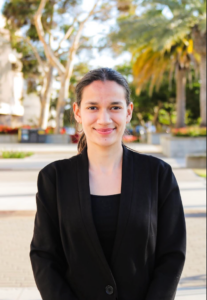
Bhavya Uniyal is a fourth year Political Science and Economics student at UC Santa Barbara. She serves as the outreach and marketing coordinator for UCSB’s Take Back the Tap program dedicated to creating awareness about the tap water quality in Goleta, CA. During her time at UCSB, Bhavya has worked on various research projects and wishes to contribute to policy formulation in the sphere of green energy transitions in the Global South. She loves watching movies, reading, plant-based cooking, hiking, and doing yoga.
Making Waves: Student Art Showcase
Multiple Artists