John L. Parker, Esq.
Foreword: A Long Time Ago
John Parker, Esq.
Foreword: A Long Time Ago
Water.
It is a finite resource.
Human life and society cannot survive without water. It will become even more important as the planet changes, impacting weather and changing the levels of the sea.
Indeed, ancient civilizations found ways to transport water for hundreds of miles through aqueducts – some of the first infrastructure enabling society to thrive.
Other civilizations, while questioning whether the world was flat, still took to the sea to travel westward, and would begin the reconfiguration of the societies of the new world into dominions controlled by few countries.
Through all that has travailed through the eons, perceptions of water and respect for it have enabled or threatened success and prosperity.
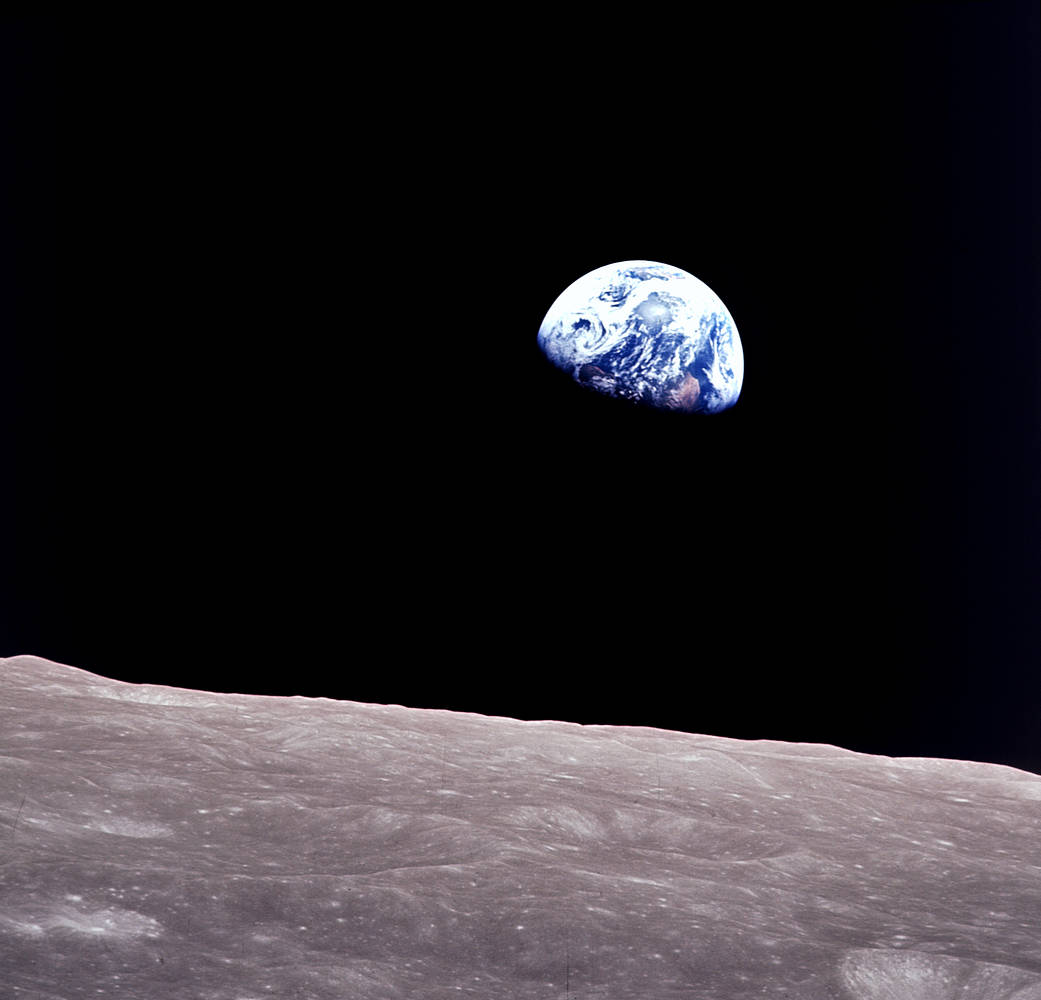
In 1968, American astronauts onboard Apollo 8 beared witness to the Earth from space for the first time. The image, Earthrise, would forever change perceptions of our planet and the abundant water in its oceans, but also its isolation in the cosmos and its fragility.
Image: Apollo 8: Earthrise (Shown to the Left)
Taken aboard Apollo 8 by Bill Anders, this iconic picture shows Earth peeking out from beyond the lunar surface as the first crewed spacecraft circumnavigated the Moon, with astronauts Anders, Frank Borman, and Jim Lovell aboard.
Image Credit: NASA available at https://www.nasa.gov/wp-
The rising Earth is about five degrees above the lunar horizon in this telephoto view taken from the Apollo 8 spacecraft near 110 degrees east longitude. The horizon, about 570 kilometers (250 statute miles) from the spacecraft, is near the eastern limb of the Moon as viewed from the Earth. On the earth, the sunset terminator crosses Africa. The south pole is in the white area near the left end of the terminator. North and South America are under the clouds. The lunar surface probably has less pronounced color than indicated by this print.
The taking of this image, and its widespread circulation occurred around the time that the nascent environmental movement was born in the United States. Earth Day would become a day of reflection, education, and advocacy for issues that included Clean Water. Many laws would be passed as part of this effort regulating many activities throughout the country – also impacting clean air and hazardous substances, among others.
In April 2026, NASA’s Artemis II would again provide perspective on Earth. This technical achievement, over fifty-five years later, again depicts the Earth from an astronauts perspective in space. These images, from the moon showing earth in the distance, captured the imagination of Americans and people across the world. The astronaut’s images offered a universal moment for all humanity, for all countries, and those of all political beliefs – to see the beauty of Earth, and to again, whatever issues or conflict exists among peoples that may separate them, to see and to appreciate the fragility and isolation of Earth, our only home.

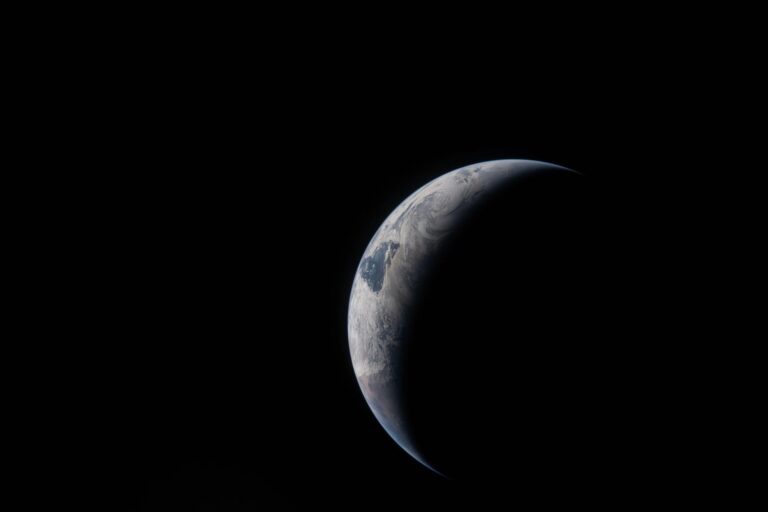
Image: Home In Sight
art002e024014 (April 4, 2026) – A thin arc glowing in the darkness of space. Sunlight traces the curves of the ocean and clouds, while the rest of the planet fades into shadow. Credit: NASA. aAvailable at https://www.nasa.gov/image-detail/amf-art002e024014
The decades between the taking of these iconic images have been both periods of great change – the Earth is not the same as it was in the 1960s. It has witnessed human impacts and changes they have caused, including to the climate. As much as Earth has changed – it is also the same.
The dilemma of how to protect water, to have it be safe for us and for our families to consume, and for businesses to rely upon to thrive, have proven to be a universal and definitive human challenge.
This edition of The Disruptive Quarterly reflects the universal challenge of clean water. The written submissions and images reflect different generations and cultures and their respective views of the value and importance of clean water. The submissions also comment on challenges of modern industrial society and the environmental impacts of its systems, and the challenges of a set of ubiquitous chemicals that impact public health and have found their way to every corner of the planet.
A series of submissions takes us to the suburbs of New York City and the heart of the City’s drinking water system. Students have taken part in an effort to identify and to preserve the history of a site in Chappaqua comprised of Native American ceremonial stones and structures, known as Buttonhook Forest. These commenters reflect on how ancestors of this valley marked the landscape to identify the importance of clean water. Centuries later, the New York City government would do the same thing here with its watershed protection rules.
The submissions also take us up and through the Hudson River Valley, where artists and advocates describe the issues impacting clean water, and how appreciation of and reverence for clean water has changed their lives.
There are also important submissions from upstate New York and the Hamptons of Long Island from Native American leaders discussing their views of clean water and the challenges they continue to face- from protecting fishery lands to addressing the water impacts of data centers.
The edition also highlights the challenge from a class of PFAS chemicals, commonly known as “forever chemicals” threatening clean water throughout the United States and the world. A PFAS forum on Long Island highlighted and focused on the challenges of these chemicals – substances that were not found on Earth, but were created for specific longevity that has resulted in their widespread use and importantly, the ability of this class of chemicals to resist breaking down in the environment. This forum highlighted legal issues and technical approaches to clean drinking water and to remediating sites that are contaminated with these chemicals.
It also focuses on the international nature of the PFAS challenge with a focus on a recent forum at the Norwegian Embassy in Washington, D.C. This significant event also brought together the legal perspective, national and international experts, and leaders of innovative companies that are striving to find ways to clean up the legacy of “forever chemicals” and to find innovative ways to avoid their use in the first place.
Finally, to complete this journey, this edition offers views and comments regarding the importance of water from the next upcoming generation.
The need for clean water is universal.
Generations have shared the same water – it is a common thread through the history of humanity.
I welcome you to take a few moments to review the impressive collection of concerned folks that came together for an important, if not Disruptive, discussion that is part of all of our lives.

John Parker, Esq. \
Environmental Lawyer / Guest Editor
John leads the Environmental, Energy, and Resources Practice Group of the law firm of Sahn Ward Braff Coshignano, PLLC. John has been an environmental attorney for over twenty-five years and brings a wealth of experience and specialized environmental expertise in matters involving the Environmental Conservation Law, Clean Water Act enforcement, the Navigation Law, environmental regulatory compliance, hazardous substances, Superfund litigation, and brownfield redevelopment.
He serves as Second Vice Chair of the Environmental and Energy Law Section of the New York State Bar Association where he also serves as a member of its Executive Committee. He serves as Chair of the Nassau County Bar Association Environmental Law Committee and a member of its Board of Directors.
John also serves as the Policy and Legal Advisor to 22nd Century by Design.
Linked In: https://www.linkedin.com/in/johnlouisparker/