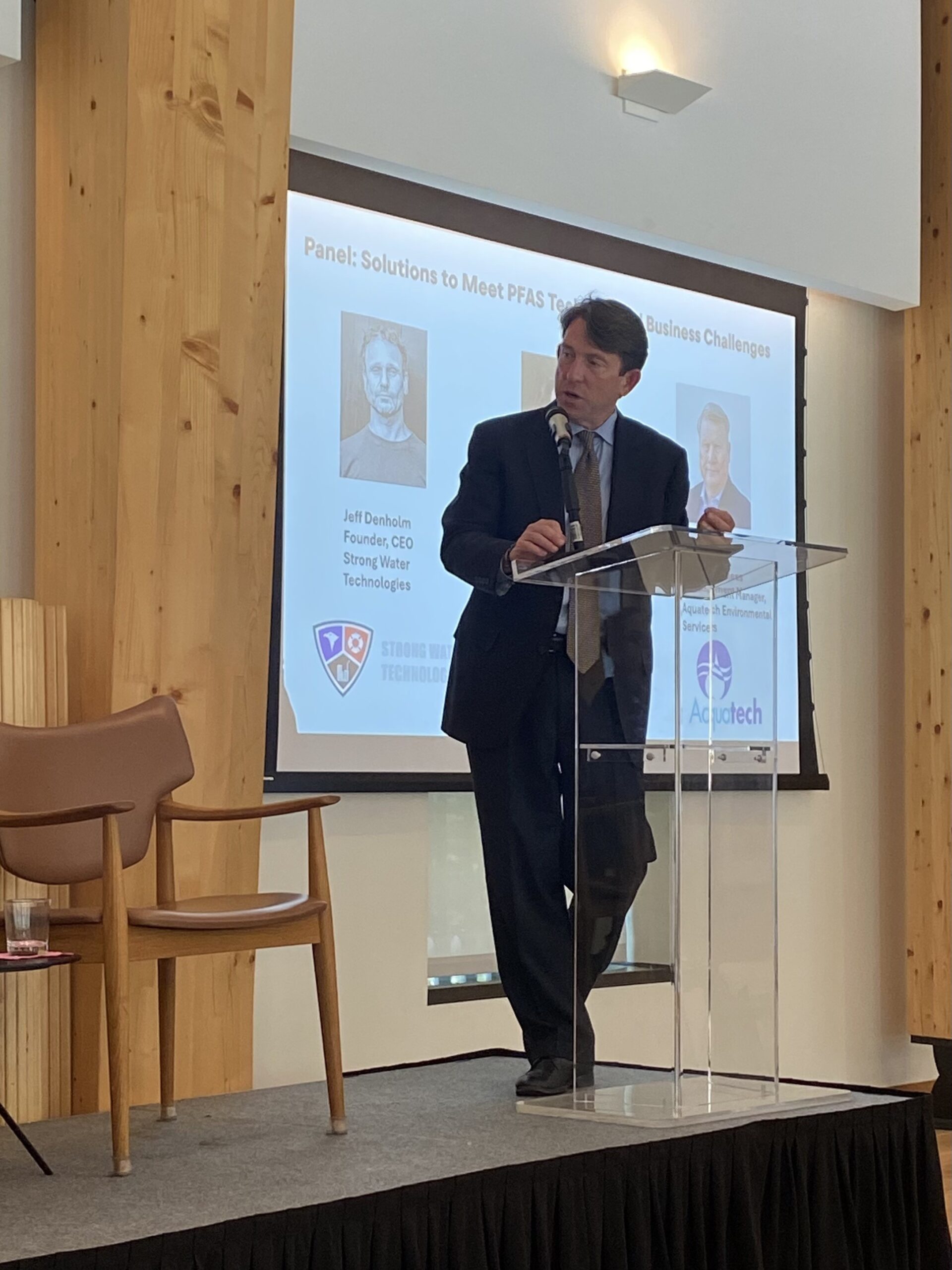
Moderator: John L. Parker, Esq.
Norway Means Business: PFAS Challenges Facing Communities Across the Globe - Opening Remarks
Norway Means Business: PFAS Challenges Facing Communities Across the Globe
June 11, 2026
Summary of Opening remarks
John L. Parker, esq.
Moderator
The PFAS family of chemicals has become known as the “forever chemicals.”
As more has been learned about this family with thousands of different variations, they have increasingly become the new forever concern due to their design, which intentionally sought longevity for industrial and other purposes.
They are now found in many products that you would know, and even in pharmaceuticals, which you may not expect.
These chemicals, in some ways, are like a forever friend that you did ask to make and that you cannot seem to shake.
Of the many impacts resulting from the widespread use and implementation of these chemicals, is their ability to get into drinking water, raising public health and regulatory agency concerns. These concerns are both federal, and state.
There are many places that drinking water comes from underground aquifers – sources that produce water for consumers and businesses regardless of what is located on different properties above them. And they are tapped as a source of drinking water regardless of what was released – intentionally or unintentionally – many years ago, and to this day.
One example of this challenge is found in New York. Long Island has forty-eight water suppliers.
These suppliers rely upon somewhere between 1,200 and 1,500 public supply wells and there are also about 25,000 on private wells.
The challenge to remove these complex chemicals from this drinking water so that it does not reach consumers is multi-level. Dealing with the end of pipe challenge to the water supply is only a part of it.
The challenge is also to increase the public’s understanding of how contamination occurs and how it can be reduced, minimized, or eliminated.
The challenge to regulators, and the various countries around the world is to strike the correct balance in their regulatory approach. There are many ongoing debates at the state and federal level on how, and whether, this extensive family of chemicals should be regulated and what should be disclosed to the public.
There are also questions of what levels of these chemicals can be detected, the efficacy of the various testing regimes, and what actionable levels should become regulatory requirements and for which forever chemical (or all of them). These are all questions that remain in flux.
The range of standards and implementation schedules is illustrated in the varied differences in the different states and the federal government to two of these chemicals, PFOS and PFOA.
Further, there are widespread legal implications for regulation of this family of chemicals, and which may of them be ultimately be determined to be hazardous under federal law. These designations not only increase cost and liability concerns that impact many commercial and real estate transactions, they are also fundamentally different for industrial dischargers and landfill leachate collection systems.
The purpose of our discussion today is to review how technology and innovation is rising to the occasion to better understand and to better address this family of chemicals.
The discussion necessarily takes an international dimension due to the interconnected nature of our economies and the products that travel freely internationally, but also due to the ubiquitous nature of the contaminants that have found their way around the entire world.
So, what are some examples of what is being done at the public and legislative level?
New York is an interesting example of how these issues are intersecting with public policy. There are currently some 20 legislative initiatives pending in both houses of the State Legislature. They address many issues, from growing concerns about the consumer packaging to how playgrounds should be constructed and how bio solids should be managed. And New York is only one State, with California and others aggressively moving forward to address these issues. There are also different approaches in other countries, with many important ongoing discussions in the European Union. Notably, Norway as we will discuss today, also seeks to find its own way forward.
These issues are further complicated by the emerging understanding and acknowledgment that current testing may not identify many forms of these chemicals. And these concerns are far reaching, even addressing whether insurance should cover testing of patient’s exposure.
Welcome to the discussion of these complex challenges impacting the world’s communities.
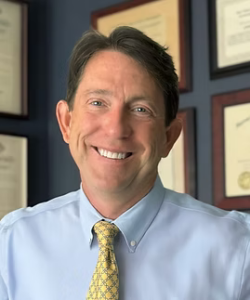
Moderator:
John L. Parker, Esq.
John leads the Environmental, Energy, and Resources Practice Group of the law firm of Sahn Ward Braff Coshignano, PLLC.
John has been an environmental attorney for over twenty-five years and brings a wealth of experience and specialized environmental expertise in matters involving the Environmental Conservation Law, Clean Water Act enforcement, the Navigation Law, environmental regulatory compliance, hazardous substances, Superfund litigation, and brownfield redevelopment.
He serves as Second Vice Chair of the Environmental and Energy Law Section of the New York State Bar Association where he also serves as a member of its Executive Committee. He serves as Chair of the Nassau County Bar Association Environmental and Energy Law Committee, and is a member of its Board of Directors.
John also serves as the Policy and Legal Advisor to 22nd Century by Design.
Norway Means Business - Keynote Address
Dennis Calvert, CEO & Chairman, BioLargo, Inc.
Norway Means Business: Opening remarks
Moderator: John L. Parker, ESQ.
Addressing Global PFAS Challenges Needs Partnerships Innovation Ecosystem
Atam P. Dhawan, Ph.D.