Jack Love
Watershed Law Meets Indigenous Legacy
Jack Love
Watershed Law Meets Indigenous Legacy: The Case of Buttonhook Forest
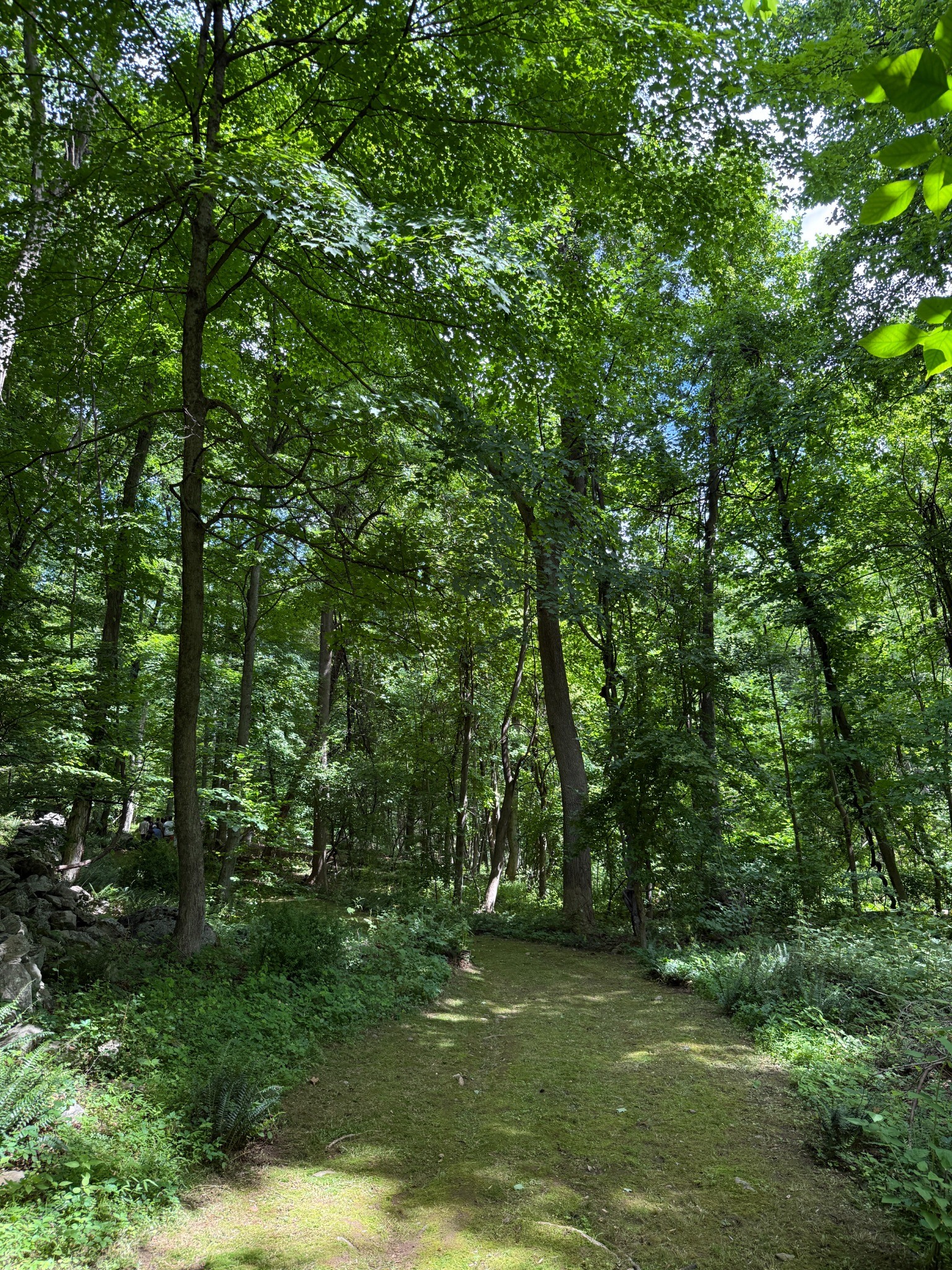
Just 22 miles north of New York City, in the hills of Chappaqua, lies a small forest that has become an example of the historical struggle for cultural recognition, clean water and environmental preservation. Known as Buttonhook Forest, this land sits within the watershed that feeds into the New Croton Reservoir, a key component of the New York City water supply system. The Chappaqua Central School District currently owns this 20.3-acre forest, and for several years, was looking to sell the land for residential development. In 2019, the Chappaqua Central School District received approval to divide the acres into lots for luxury homes. However, after legal obstacles and persistent environmental and cultural activism, the development plan crumbled before it could start. Buttonhook Forest has become a success story of cultural and environmental resilience. Here is that story.
Built centuries ago, in the landscape of Buttonhook Forest are carefully arranged stone structures placed precisely above underground waterways that flow toward tributaries and eventually into the New Croton Reservoir. Members of the Ramapough Lenape Nation, an indigenous group long relocated from the area, have visited the site to further awareness of these structures. They are believed to have been built centuries ago as sacred markers for the water beneath the surface. For Indigenous communities, the meaning of these markers follow their ecological understanding of the land: the pristine connection between the forests, wildlife, water systems, and the people it sustains.
Beginning in the 17th century, the Indigenous way of life in the Hudson Valley was disrupted by European colonization. Lenape groups who once resided throughout the region were gradually forced off the land, and a widespread relocation had taken place. Some Lenape communities moved west, while others relocated to Stockbridge, Massachusetts, and eventually settled in the Midwest. The Stockbridge-Munsee Community Band of Mohican Indians presently resides in Wisconsin.
For the past several years, there has been a collaborative effort to preserve this area, not just for the history and sacredness woven into the land, but also the environmental issues that are now being brought to light. The same landscapes that these Indigenous communities identified as water sources and sacred grounds are now considered one of the most nourishing and substantial drinking water systems in the United States.
The nonprofit, Friends of Buttonhook Forest, Inc., headed by President Victoria Alzapiedi and Vice President Tracey Bilski, have led the preservation effort. In 2021-2022, after the Chappaqua Central School District received preliminary approval from the Town of New Castle Planning board in an attempt to sell the land for development, the Friends of Buttonhook responded. The nonprofit initiated a fundraising campaign for $1.5 million to purchase the land before any development could take place, with the goal of transferring ownership to the Brothertown Indian Nation. However, the School District was successful in finding a developer but could not obtain the necessary stormwater permit from the New York City Department of Environmental Protection (DEP). Since Buttonhook Forest sits within the watershed of the New Croton Reservoir, the land is subject to strict environmental oversight. DEP administers watershed regulations that limit development that have any possibility of polluting the water supply, increasing stormwater runoff, or disrupting natural filtration processes. The School District saw the effect of those regulations, and their inability to obtain a permit led to years of litigation in Westchester County Supreme Court. Eventually, a settlement was reached between the parties, resolving the dispute.
During those years of litigation, Friends of Buttonhook pursued their own legal fight by requesting recission of the Negative Declaration under the State Environmental Quality Review Act (SEQRA). When a planning board, or any governmental agency for that matter, issues a negative declaration, they affirm a proposed development and ensure that the project will have no environmental impact. In this case, an Article 78 challenge was brought, when there was no recission. When those affirmations omit, ignore or simply miss possible ecological impacts, SEQRA allows for recourse. SEQRA requires a lead agency to rescind a Negative Declaration when “substantive changes are proposed for the project; or new information is discovered,” before the final approval of an action. If the agency refuses to rescind, a party can challenge the decision through what is called an Article 78 proceeding. To prevail in this case, a challenger must show that the agency failed to take a “hard look” at the potential impacts of a project. Under Article 78, Friends of Buttonhook challenged the preliminary approval by the Town of New Castle Planning Board for not considering the environmental issues concerning the land. Since the School District was unsuccessful in obtaining the stormwater permit, the nonprofit is in the process of purchasing the land but needs to raise enough funds to do so.
As a law student intern for the Pace Environmental Litigation Clinic, I had the chance to work with the Friends of Buttonhook and be well acquainted with Tracey and Victoria, as well as Lynn Trotta, who had an unmatched expertise of Biodiversity and knew the land like the back of her hand. Touring the area with Tracey, Victoria, and Lynn, my eyes were opened to the significance of the land. The rock walls and stone structures, to an untrained eye, may be missed, and the botany may appear to just be plants. Each of these were safekeeping a story of human beings and our ancient harmony with nature. Before arriving at Buttonhook, I understood many of the environmental issues at stake. Once I left, it became apparent that Buttonhook had much more to protect. Although I have been sharing the necessity of preserving Buttonhook Forest, it is important to note that this land is just a prime example of the many communities within our nation fighting to protect not only clean water and right to a healthy environment, but the cultural identities of communities that cannot and will not be forgotten.
Buttonhook Forest is still at risk today, and if you have any interest in learning more about Buttonhook or donating to Friends of Buttonhook Forest, inc. to transfer ownership to Brothertown Indian Nation, you can visit their website here: https://www.preservebuttonhook.org/
Jack Love
Author
Jack Love is a recent graduate of the Elisabeth Haub School of Law at Pace University, where he specialized in Environmental Law. He is taking the Bar Exam this summer and beginning work in August. Originally from Los Angeles, California, he moved to Westchester County to pursue a career in environmental advocacy and legal protection of natural resources, land and the universal right to a clean environment. During his time at Pace, Jack interned with the Environmental Litigation Clinic, where he worked alongside Friends of Buttonhook in their efforts to preserve the Buttonhook Forest in Chappaqua, New York. Following graduation, he will join the San Diego District Attorney’s Office, with the long-term goal of becoming an environmental crimes prosecutor